


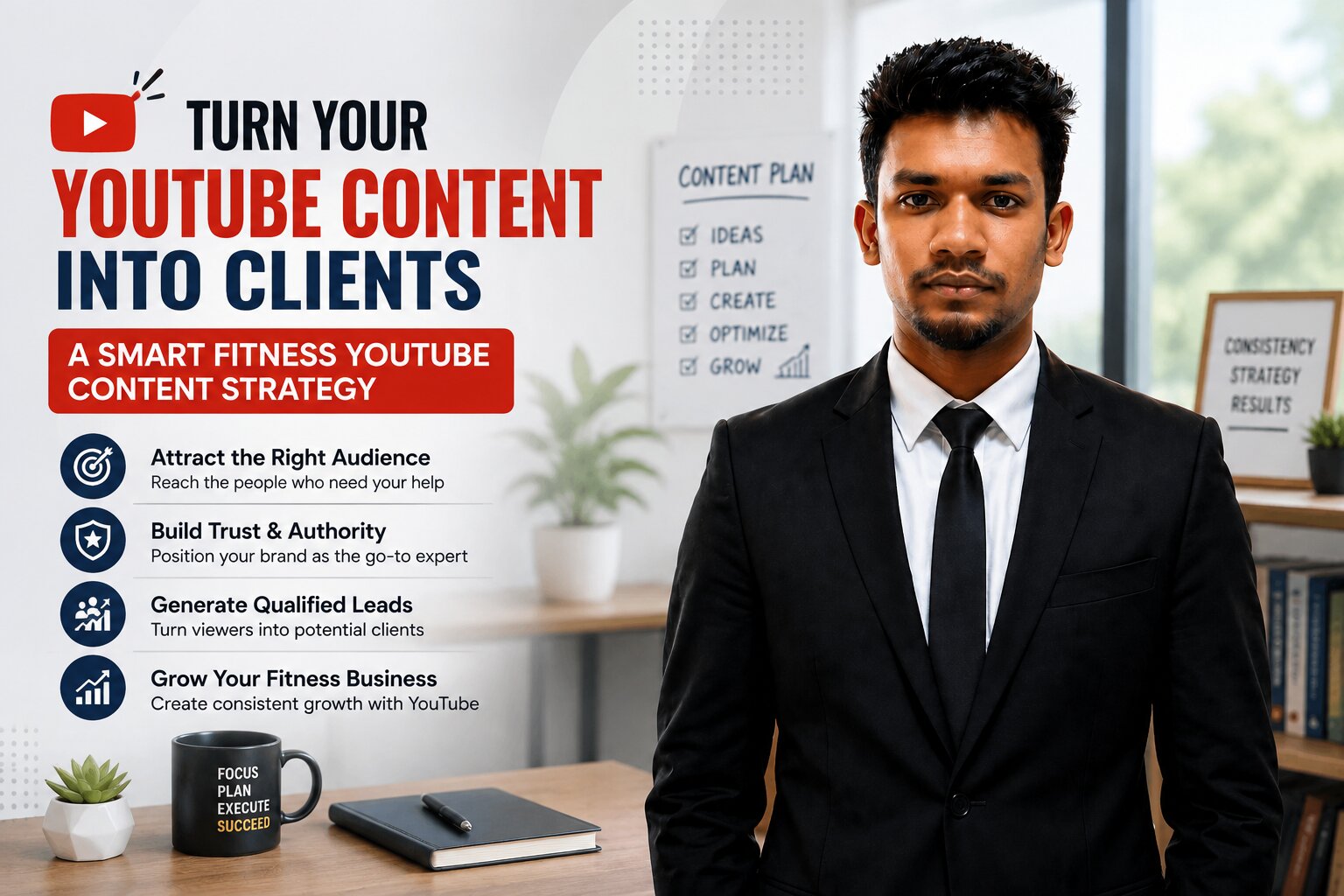
Fitness YouTube Content Strategy: How to Create Content That Attracts Clients
Posting fitness videos every week does not automatically create business growth. Many gyms, personal trainers, and online fitness coaches publish consistently but still struggle with low views, weak engagement, poor search visibility, and very few qualified inquiries.
The problem is often not the number of videos. It is the strategy behind them.
A strong Fitness YouTube Content Strategy connects what your target audience is searching for with the problems your business can solve. The goal is to create content that attracts relevant viewers, builds trust, demonstrates expertise, and gives potential clients a logical next step.
What Is a Fitness YouTube Content Strategy?
A Fitness YouTube Content Strategy is a structured plan for deciding what videos to create, who they are for, what search intent they address, and how each video supports a business objective.
For a fitness business, that means moving beyond random workout videos and creating content around real audience problems.
For example:
Weak approach:
“Monday Leg Workout”
Better approach:
“How to Build Stronger Legs: A Beginner-Friendly Training Guide”
The second topic addresses a specific need and gives YouTube clearer context about the video’s subject.
For businesses that need a more complete plan, build a fitness YouTube content strategy can help connect individual videos into a broader content system.
Start With Your Ideal Fitness Audience
Before choosing topics, define who you want to attract.
Your audience might include:
- Personal training clients
- Gym members
- Online coaching prospects
- Weight-loss clients
- Bodybuilding clients
- Yoga or wellness clients
Each audience has different questions, concerns, and buying motivations.
A personal trainer targeting busy professionals, for example, could create content around efficient workouts, exercise planning, consistency, and lifestyle challenges rather than publishing generic fitness content.
The more closely your videos match the problems of your ideal customer, the easier it becomes to build meaningful fitness audience engagement.
Build Content Around Search Intent
Not every viewer is ready to become a client.
Someone searching for “how to lose weight” may simply be researching. Another person searching for “online weight loss coach” has much stronger commercial intent.
Your content strategy should therefore include different types of topics.
Awareness Content
These videos answer broad questions and introduce your expertise.
Examples:
- Common fitness mistakes
- Exercise education
- Nutrition-related educational topics
- Beginner fitness guidance
Consideration Content
These videos help viewers evaluate solutions.
Examples:
- Personal training vs. working out alone
- How online fitness coaching works
- How to choose a personal trainer
- What an effective training program includes
Decision Content
These videos address people who are closer to taking action.
Examples:
- What to expect from your coaching program
- Client onboarding process
- Training methodology
- Frequently asked questions about your services
This creates a content funnel rather than a collection of unrelated uploads.
Use High-Intent Keywords to Choose Better Topics
Keyword research should influence your content decisions before you start producing videos.
Instead of choosing topics only because they sound interesting, identify questions and phrases that match your audience’s problems and commercial intent.
For example, a fitness coach could research topics around:
- Personal training
- Online fitness coaching
- Weight-loss coaching
- Home workouts
- Fitness programs
- Strength training
Learning how to find high-intent YouTube keywords can help you prioritize topics that are more closely aligned with what potential customers actually want to know.
However, keyword volume should not be the only consideration. Relevance, competition, search intent, and your ability to provide genuinely useful expertise also matter.
Turn One Topic Into a Content Cluster
A strong channel does not depend on isolated videos.
Suppose an online fitness coach creates a main video about building a sustainable workout routine. Supporting videos could cover:
- Common workout planning mistakes
- How to stay consistent
- How to structure weekly training
- How to choose exercises
- How coaching can improve accountability
These related topics can be connected through playlists and internal references, helping viewers discover more relevant content.
The same principle applies to your website. Your YouTube strategy can support related SEO content, while your website can provide deeper resources for viewers who want more information.
Optimize Videos for Both Viewers and YouTube
A good content strategy still needs strong execution.
Pay attention to:
- Search-focused video topics
- Clear and compelling titles
- Relevant descriptions
- Strong thumbnails
- Audience retention
- Calls to action
- Consistent branding
If your videos receive impressions but few people click, the issue may be packaging rather than the topic itself. Improve your fitness YouTube channel can help identify common optimization problems that affect visibility and conversions.
Likewise, retention matters because attracting a viewer is only the first step. Your content needs to deliver the promised value quickly and maintain interest throughout the video.
Connect YouTube Content to Lead Generation
A fitness YouTube channel should have a clear business purpose.
Your CTA might direct viewers toward:
- A consultation
- A coaching application
- A website service page
- A free resource
- A fitness assessment
- A contact form
The CTA should match the viewer’s level of intent.
Someone watching an educational beginner video may need more helpful resources before making an inquiry. Someone watching a video about your coaching process may be ready for a direct consultation CTA.
This is where YouTube lead generation for personal trainers becomes part of the content strategy rather than something added at the end.
You can also learn how to generate qualified leads from YouTube by connecting content topics, audience intent, and conversion paths.
Measure Business-Relevant Performance
Views and subscribers can provide useful context, but they should not be your only measures of success.
Review metrics such as:
- Impressions
- Click-through rate
- Audience retention
- Watch time
- Traffic sources
- Engagement
- Website visits
- Leads or inquiries
The right metrics depend on the objective of each video.
A video designed for awareness may primarily build reach and engagement, while a decision-stage video should be evaluated more closely for qualified actions.
For a deeper measurement framework, track the YouTube metrics that actually matter.
Common Fitness YouTube Strategy Mistakes
Avoid these common problems:
- Uploading random topics without a defined audience.
- Creating every video around broad fitness keywords.
- Focusing on views instead of business relevance.
- Using weak titles and thumbnails.
- Ignoring audience retention.
- Publishing without a conversion path.
- Never reviewing competitor content.
- Creating videos without connecting them to a larger content funnel.
The solution is not simply to upload more. It is to create a system where each video has a clear audience, purpose, and role.
FAQ
How often should a fitness business post on YouTube?
There is no universal posting frequency. A sustainable schedule that allows you to maintain quality, relevance, and consistency is more useful than publishing frequently without a clear strategy.
What YouTube content should fitness coaches create to get clients?
Fitness coaches should create content that addresses their ideal clients’ problems, questions, objections, and goals. Educational, comparison, problem-solving, and service-related videos can all have a role in the customer journey.
Can YouTube generate leads for a fitness business?
Yes, YouTube can support lead generation when relevant content is connected to clear calls to action and appropriate conversion paths. Results depend on factors such as audience fit, content quality, visibility, trust, and offer positioning.
Should fitness businesses focus on keywords or content quality?
Both matter, but keywords should help you understand demand and search intent rather than dictate every creative decision. Useful content that satisfies the viewer should remain the priority.
How can I grow a fitness YouTube channel?
A sustainable fitness channel growth strategy combines audience research, keyword research, strong video packaging, useful content, audience retention, consistent publishing, analytics review, and continuous optimization.
A successful Fitness YouTube Content Strategy is not simply a calendar of video topics. It is a system that connects audience problems, search intent, useful content, YouTube optimization, audience engagement, and business conversion goals.
For fitness businesses, the objective should be to create a channel that attracts the right viewers and gives those viewers a clear reason to continue engaging with the brand.
If your fitness YouTube channel is getting views but generating few qualified inquiries, a YouTube SEO and content audit can help identify gaps in your topics, optimization, audience targeting, and conversion path. A focused review can show where your current strategy may be losing visibility or business opportunities.
[…] your channel is struggling with inconsistent content or random uploads, build a fitness YouTube content strategy can help connect content planning with business […]